sat suite question viewer
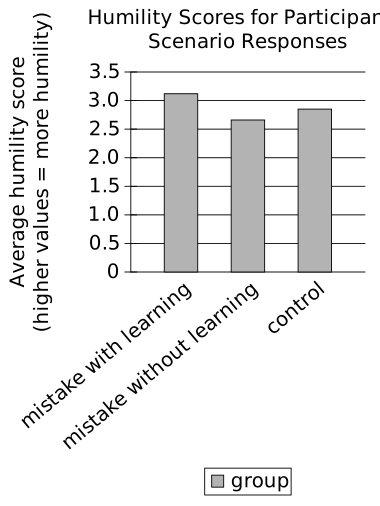
- The Average humility score data for the 3 bars are as follows:
- mistake with learning: 3.12
- mistake without learning: 2.66
- control: 2.85
Jia Hu and colleagues hypothesized that workplace leaders who reflect on lessons learned from past mistakes are likely to exhibit more humility than leaders who don’t engage in such reflection. To test this, the team placed 301 managers in one of three groups. Participants in two experimental groups were asked to reflect on a mistake, one group focusing on a mistake that resulted in learning and the other group focusing on a mistake that didn’t result in learning. Participants in a control group were asked to reflect on their daily routine. All the participants then described how they would respond to a workplace scenario. After evaluating the responses for evidence of humility, the researchers concluded that their hypothesis was correct.
Which choice best describes data in the graph that support the researchers’ conclusion?
Explanation
Choice C is the best answer because it describes data in the graph that support the researchers’ conclusion that their hypothesis about workplace leaders and humility was correct. According to the text, Jia Hu and colleagues "hypothesized that workplace leaders who reflect on lessons learned from past mistakes are likely to exhibit more humility than leaders who don’t engage in such reflection." The bar graph shows the humility scores for managers who participated in Jia Hu and colleagues’ study. It shows average humility scores for managers who reflected on a past mistake that they learned from, managers who reflected on a past mistake that they didn’t learn from, and managers who were in the control group that, according to the text, simply reflected on their daily routines. The graph shows that managers who reflected on a past mistake they learned from received an average humility score between 3.0 and 3.5. Both the control group and managers who reflected on a mistake they didn’t learn from received a lower average humility score of between 2.5 and 3.0. Thus, the managers who reflected on a past mistake that resulted in learning exhibited more humility on average than the managers in the other two groups did. This supports the researchers’ conclusion that their initial hypothesis that workplace leaders who reflect on past mistakes they learned from exercise greater humility was correct.
Choice A is incorrect. Although according to the graph it’s true that none of the group’s humility scores exceeded 3.5, this idea does not support the researchers’ conclusion that their initial hypothesis was correct. The statement that none of the three groups’ average humility scores exceeded 3.5 does not distinguish between those leaders who reflected on lessons learned from past mistakes and those who didn’t, so it would not support Hu and colleagues’ hypothesis that workplace leaders who reflect on past mistakes they learned from exercise greater humility. Choice B is incorrect. While the graph shows that managers in the control group did exhibit less humility than the experimental group of managers who reflected on a mistake they learned from, the graph also shows that the control group exhibited more (not less) humility than the experimental group that reflected on a mistake they didn’t learn from. Furthermore, the idea that the managers in the control group exhibited only slightly less humility on average than the managers in the two experimental groups did would not support the researchers’ conclusion that their initial hypothesis that workplace leaders who reflect on past mistakes they learned from exercise greater humility was correct. Choice D is incorrect because there is no indication in the graph that all three groups of participants exhibited less humility on average than the researchers expected. The graph and text don’t cite any specific expectations that the researchers had with regard to the humility scores for each group.